Naming Checklist
Chinese Naming Taboos & Pitfalls: Homophones, Rare Characters, and Tone Balance
Before chasing numerology scores or elemental radicals, a great Chinese name must pass four practical gates: clean spoken homophones with the surname, standard digital character support, family generational respect, and balanced writing ease.
TianJiGe Editorial TeamUpdated
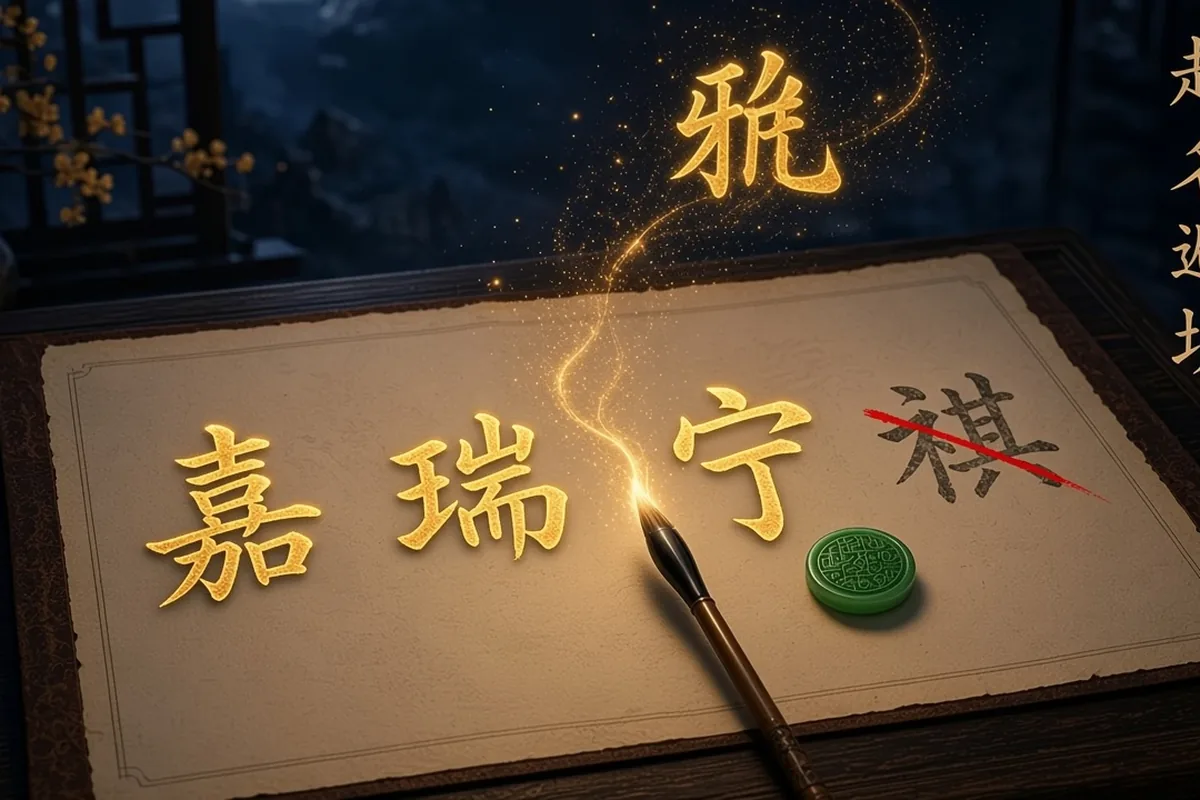
Screen every candidate name through five checks: read the full name (surname + given name) aloud in Mandarin and family dialects to catch awkward homophones; stick to standard modern characters supported by banking, airline, and passport systems; avoid characters used in parents' or grandparents' names; balance visual structure and stroke count; and vary the four Mandarin tones for a natural cadence.
Pitfall 1: Awkward full-name homophones when paired with the surname
Two given-name characters can look poetic on their own yet blend with the surname into an unintended joke or negative phrase when spoken quickly (such as Surname *Du* + *Zi-Teng* sounding like 'stomachache').
Always read the complete name aloud ten times at normal speed—in both Mandarin and your family's local dialect—and check the pinyin initials.
Pitfall 2: Obscure archaic characters that break digital systems
Picking ultra-rare characters from ancient dictionaries to avoid duplicate names creates lifelong friction: airline tickets, banking apps, hospital records, and passport systems often fail to render non-standard glyphs, forcing the child to deal with name-mismatch paperwork for decades.
Pitfall 3: Family generational taboos and visual stroke overload
In Chinese family tradition, a child's given name should not duplicate the characters (or exact syllables) of parents or grandparents.
Visually, avoid stacking the exact same radical across all three characters (like three water radicals in a row) or choosing 25-stroke characters that exhaust a child during timed school exams.
How to Get Started
- 1Say the full name aloud in Mandarin and family dialects to rule out awkward homophones.
- 2Type the characters on standard phone and computer keyboards to confirm they are common, standard glyphs.
- 3Cross-check against parents', grandparents', and close cousins' names.
- 4Mix level tones (Tones 1 & 2) and oblique tones (Tones 3 & 4) so the name rings clearly.
Common Mistakes
- Testing the given name without saying the surname in front of it.
- Using a multi-pronunciation character where people constantly guess the wrong sound.
Try the Tool
Name Analysis
AI name generation and analysis — supporting baby names, brand names, and personal name insights.
FAQ
If one pronunciation is overwhelmingly standard in names or clear from context, it is fine; if strangers misread it 80% of the time, choosing an unambiguous character saves a lifetime of corrections.
Alternating level tones (1, 2) and falling/rising tones (3, 4)—such as 1-4-2, 2-4-1, or 4-2-1—sounds much more musical than three third tones or three fourth tones in a row.
Related Reading
Surname Matching Tips
Baby Naming with Ba Zi
Naming from Classical Chinese Poetry
How to Read Name Ratings
Name Analysis
AI name generation and analysis — supporting baby names, brand names, and personal name insights.
Ba Zi — Four Pillars
Chart Ba Zi with solar or lunar dates and optional true solar time — Four Pillars, Five Elements, Ten Gods, and Major Luck Cycles, plus AI analysis on demand.
Daily Fortune
Quick daily reading with luck scores, lucky colors, lucky numbers, and action tips based on your zodiac sign.