Name Rating
How to Read Chinese Name Rating Scores
Name ratings blend Five Grids, element fit, and classical labels—a useful screen, not a substitute for whether a name truly works.
TianJiGe Editorial TeamUpdated
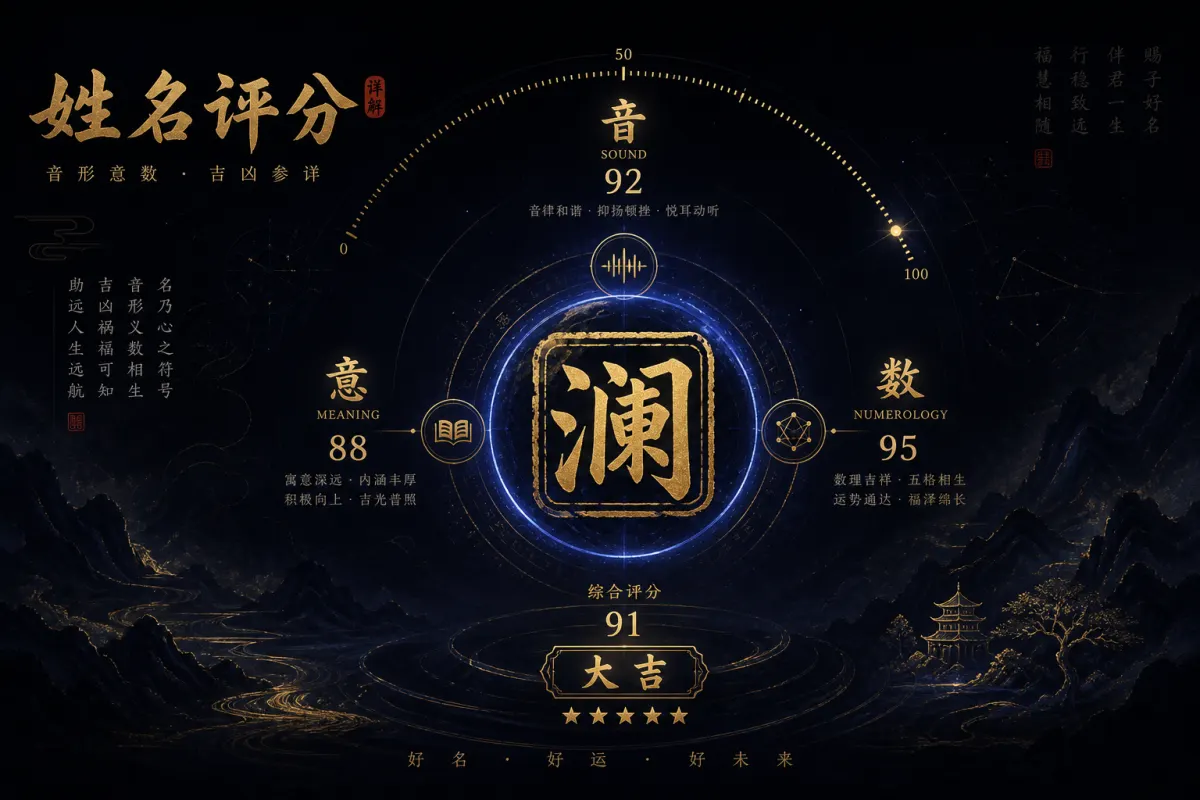
Check grid structure and element fit, then return to meaning, sound, and writing. A high score on an awkward name isn't a real win.
What ratings usually include
Most tests combine Five Grids, three-talent configuration, element matching, and classical labels into a score or grade.
Use it to shortlist candidates, not to replace taste and family choice.
Some tools also add zodiac notes, character meaning, sound quality, or duplicate-name signals, so scores from different platforms are not always equivalent.
Check the method before trusting the score
Different tools use different stroke sets, dictionaries, and element maps, so scores can shift.
One may use Kangxi strokes, another simplified strokes. One may classify elements by radical, another by sound, meaning, or origin.
When scores disagree, inspect the method before changing the name.
Why score is not enough
A top score on a clumsy, awkward, or hard-to-write name still fails in real life.
A name has to be spoken, written, printed on documents, used in school, work, and relationships.
If it carries embarrassing homophones, rare characters, excessive force, or poor fit with the surname, the high score is not very useful.
Should you rename over a low score?
Do not rush. First see whether the low score comes from grid structure, element fit, three-talent configuration, or a strict algorithm.
If the name works well in real life and only one tool dislikes it, renaming may not be worth the cost.
If the name also causes misreading, awkward sound, or daily trouble, then a new name or alias may be worth considering.
How to use the result
Treat rating as structural screening: extreme grids, obvious element clashes, or sound and meaning risks.
Final naming still leads with meaning, sound, form, family context, and daily use.
A practical flow is: set Ba Zi direction and name style, generate candidates, screen with ratings, then let human judgment choose the most durable name.
Baby name, adult name, pen name
For baby names, long-term use, writing, dialect homophones, and family acceptance matter most.
For adult renaming, documents, social relationships, professional identity, and cost matter too.
For pen names or stage names, memorability, searchability, positioning, and platform fit may matter more than the score.
How to Get Started
- 1Enter the full name for grids, elements, and score.
- 2Confirm the stroke and element method used.
- 3Read the Five Grid, Three Talent, and element structure behind the number.
- 4Test sound, meaning, writing, homophones, and use cases.
- 5Combine Ba Zi favorability, family input, and renaming cost.
- 6Use the score as screening, not the sole standard.
Common Mistakes
- Chasing score over usability.
- Panicking when tools disagree.
- Treating name tests as the only omen.
- Forgetting dialect sound, rare characters, and document use.
- Renaming as an adult without weighing practical cost.
Try the Tool
Name Analysis
AI name generation and analysis — supporting baby names, brand names, and personal name insights.
FAQ
There's no universal line—algorithms differ. Structure and usability matter more.
Useful as a naming reference, not life's sole verdict.
Related Reading
Five Grid Name Numerology
Baby Naming with Ba Zi
Name Analysis
AI name generation and analysis — supporting baby names, brand names, and personal name insights.
Ba Zi — Four Pillars
Chart Ba Zi with solar or lunar dates and optional true solar time — Four Pillars, Five Elements, Ten Gods, and Major Luck Cycles, plus AI analysis on demand.
Daily Fortune
Quick daily reading with luck scores, lucky colors, lucky numbers, and action tips based on your zodiac sign.