Pre-Marriage
Pre-Marriage Compatibility Notes
Pre-marriage matching works best when a relationship is serious—it clarifies bonds and friction, it doesn't decide breakup or marriage for you.
TianJiGe Editorial TeamUpdated
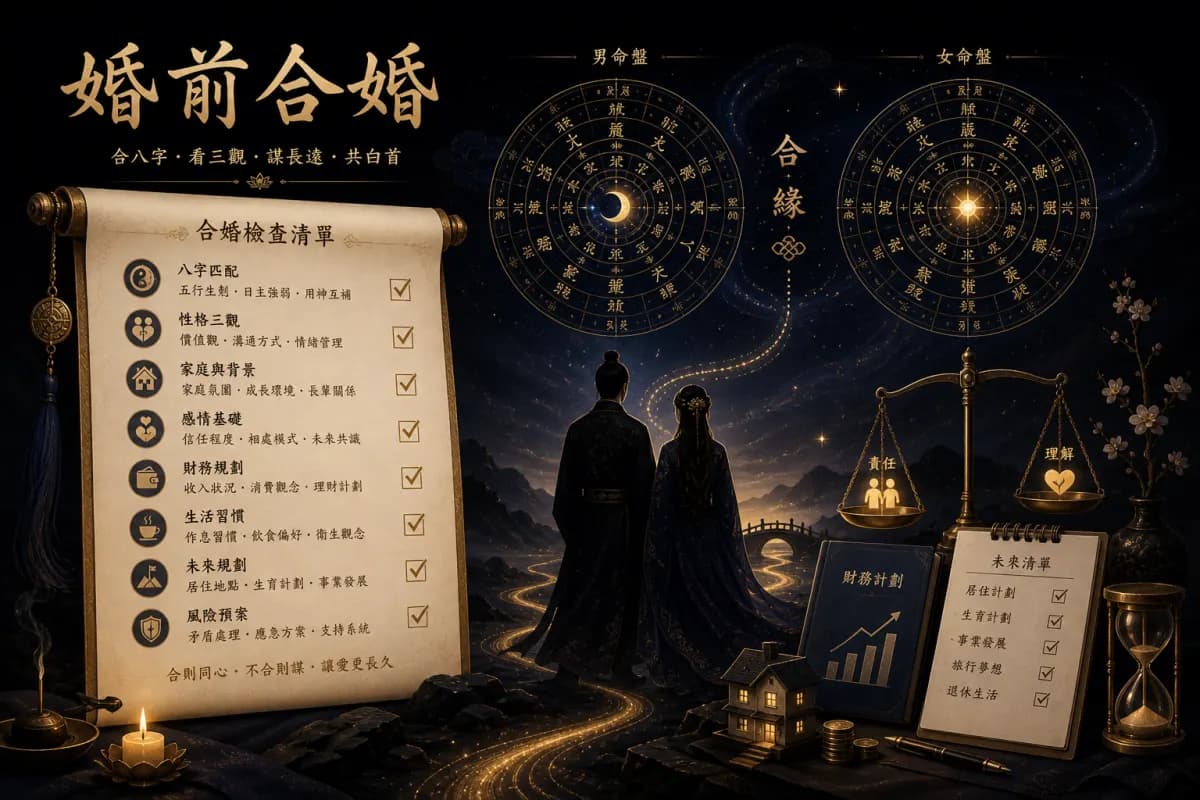
Best timing is when you're stable and planning real life together; read the six dimensions, spouse palace, partner stars, and advice—not only the number.
When to match
Matching too early can turn reference into anxiety; it helps most when you're discussing marriage, family, or wedding plans.
Reconciliation, long distance, or remarriage can also benefit from seeing old and new themes clearly.
Best timing isn't day-one validation—it's when you're serious about moving forward and need another lens on practical life.
What to focus on
Start with total score and six dimensions—strongest bond and main friction—then read advice on pacing, family, and wealth fit.
Spouse palace, Day Masters, partner stars, and elements are core anchors.
Record specific weak spots more than the number: communication, money habits, family boundaries, or rhythm mismatch.
How not to misuse results
High scores don't erase conflict; low scores don't command separation.
The value is seeing structure and homework before marriage—not fear or complacency from a number.
Don't treat the report as a verdict, and don't skip money, housing, or role talks because the score looks good.
Make it practical before marriage
If the report flags money friction, discuss budgets, debt, savings, and family spending. If it flags communication, agree on how you repair after conflict.
If timing or spouse-palace pressure appears, talk through housing, family duties, and responsibilities before the wedding rush begins.
Turn chart hints into a pre-marriage checklist—that beats rereading the score.
Read it together if possible
A pre-marriage report works best as a shared checklist, not a private source of panic.
Translate chart terms into plain issues: who needs security, who needs space, who worries about money, who avoids conflict.
If one partner feels anxious first, organize concrete questions before sharing the report.
Remarriage, reunion, long distance
Remarriage: check whether old patterns may repeat—responsibility, trust, or family pressure.
Reunion couples can compare the report with why they split before and whether the same dimension still looks weak.
Long distance needs spouse-palace, timing, and real plans aligned—visit frequency, relocation, and shared finances.
What to do after matching
Matching is one step. Still plan wedding budget, housing, children, family boundaries, and emergency roles.
If timing shows pressure, adjust wedding timing or the first year after marriage—not proof you cannot marry.
Marriage quality still depends on ongoing communication, responsibility, and willingness to adjust rules together.
How to Get Started
- 1Confirm birth details as accurately as possible.
- 2Generate the report at a serious stage.
- 3Read bond points, friction, and advice.
- 4Turn money, family, communication, housing, and rhythm into a discussion list.
- 5Bring it into conversation, not verdict.
Common Mistakes
- Matching on day one and ending over a score.
- Breaking up instantly over a low number.
- Stopping relationship work after a good score.
- Keeping the report private while anxiety builds.
- Turning chart language into blame.
Try the Tool
Love Match
Six-dimension marriage compatibility from both BaZi charts with AI relationship guidance.
FAQ
No—but if tradition matters to you, it's a strong pre-wedding tool.
Yes. It highlights themes that need more care.
Related Reading
Compatibility Score
Wedding Date Selection
Love Match
Six-dimension marriage compatibility from both BaZi charts with AI relationship guidance.
Ba Zi — Four Pillars
Chart Ba Zi with solar or lunar dates and optional true solar time — Four Pillars, Five Elements, Ten Gods, and Major Luck Cycles, plus AI analysis on demand.
Auspicious Date Picker
Browse the Chinese almanac — find the best dates for moving, weddings, business openings, and more.