Palmistry Basics
How to Read Palm Lines: The Three Main Lines
Palmistry starts with three main lines—heart, head, and life—then their depth, length, and course, and only then the mounts and finer lines.
TianJiGe Editorial TeamUpdated
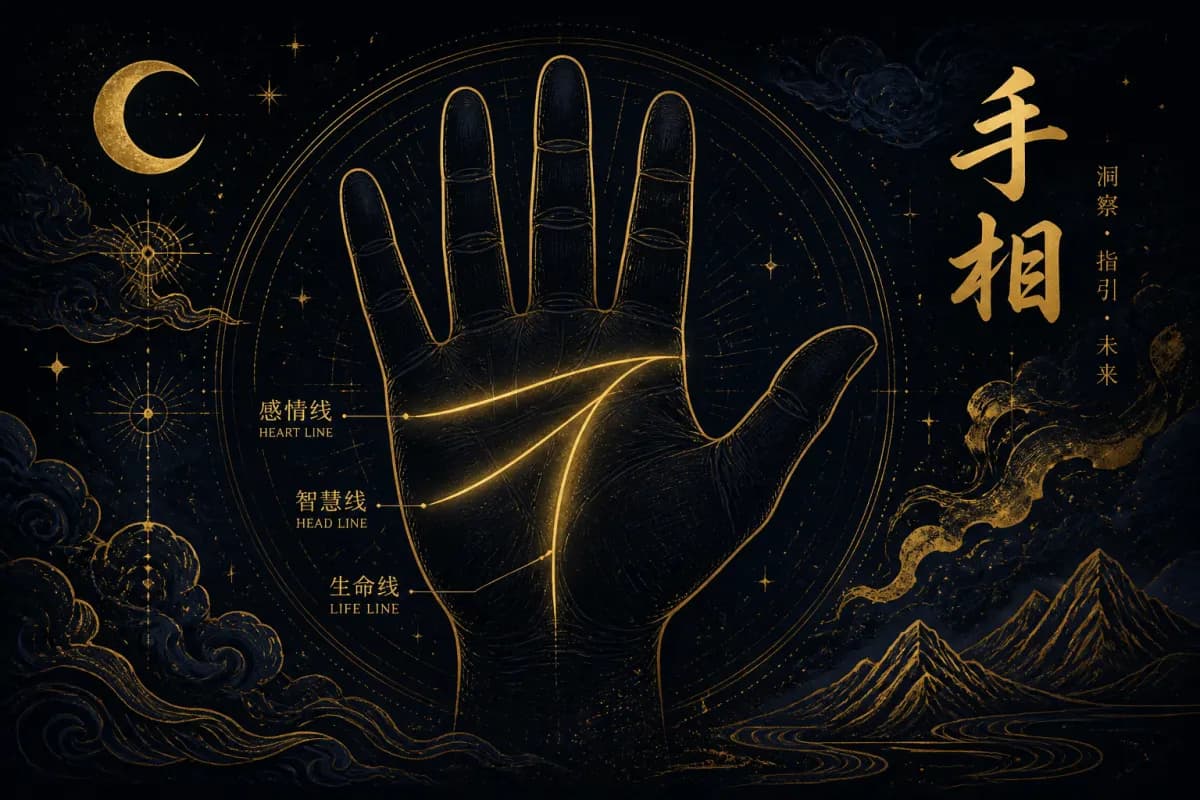
Find the heart line running across the top, the head line crossing the palm, and the life line curving around the thumb; upload a clear photo of an open palm and let the AI read the lines and mounts together.
Three lines, three facets
The heart line runs across the upper palm and leans toward how you love and approach closeness; the head line slants in from near the thumb's web and ties to thinking, decisions, and work style.
The life line curves around the base of the thumb—reading not length of life, but vitality, energy, and the rhythm of your days.
Career, marriage, and health lines sit on that skeleton. Read the three main lines first, then the supporting lines—order matters.
Depth and course over presence
A clear, deep, long line often means that facet runs steady; faint or broken hints at ups and downs—but none of it is a verdict.
Rather than fret over whether a line breaks, see whether the three lines harmonize, and whether they match your actual temperament.
Islands, crosses, and forks are not automatic doom. They often mark a chapter you can remember. The question is whether the timing fits your life.
Both hands and the mounts
Folk wisdom says 'left for men, right for women,' but the steadier view is: one hand leans to nature, the other to experience—read both for the full picture.
How full the mounts are adds clues to temperament and energy—yet palmistry is a reference; you still write the story through your choices.
Mounts like Venus or Jupiter add drive and warmth, but only with the main lines. Full mounts with messy lines read differently from clear lines on flat mounts.
Photo angle matters
Lay the palm naturally flat. Do not stretch it so hard that lines distort, and avoid dim or blurry shots.
Shoot both hands with the whole palm visible, from wrist to finger bases, so AI can read lines and mounts together.
Keep the background simple and avoid glare on the back of the hand. If lines are faint, a slightly damp palm after washing often shows them better.
Not medicine or lifespan
A short life line does not mean a short life, and breaks do not guarantee disaster. Palmistry is better for energy rhythm and temperament.
For health concerns, use checkups, sleep, movement, and medical advice—not palm lines.
Lines change slowly. Mood, career shifts, and long-term habits can soften or deepen finer lines over time. Palmistry is alive, not a factory setting.
While learning, read one hand and only the three main lines first; compare the other hand and recent state a few days later—slower beats trying to read every minor line at once.
How to Get Started
- 1Lay the palm flat and shoot it clearly in even light.
- 2Photograph both hands without shadows or distortion.
- 3Identify the heart, head, and life lines first.
- 4Read their depth, length, and course.
- 5Let AI palmistry read them with the mounts for you.
Common Mistakes
- Settling love or career on a single line.
- Ignoring the difference between left and right, reading just one.
- Treating palm changes as absolute fate.
- Reading the life line as literal lifespan.
- Using blurry or stretched-palm photos.
Try the Tool
Face & Palm Reading
Upload a photo and let AI analyze your facial features and palm lines for a personalized reading.
FAQ
Both is better. One leans to nature, the other to experience; read them against each other for a closer fit.
Not necessarily. Breaks and islands just flag a rough patch—read them with the whole hand and your real experience.
Related Reading
Reading the Marriage Line
How to Read a Face
Face & Palm Reading
Upload a photo and let AI analyze your facial features and palm lines for a personalized reading.
Ba Zi — Four Pillars
Chart Ba Zi with solar or lunar dates and optional true solar time — Four Pillars, Five Elements, Ten Gods, and Major Luck Cycles, plus AI analysis on demand.
Love Match
Six-dimension marriage compatibility from both BaZi charts with AI relationship guidance.