Elemental Harmonics
How to Read Na Yin Five Elements in Ba Zi
Na Yin represents the elemental undertone of a pillar, serving as an atmospheric texture rather than overriding the seasonal command—regular elements forge the skeleton; Na Yin enriches the soul.
천기각 콘텐츠팀업데이트
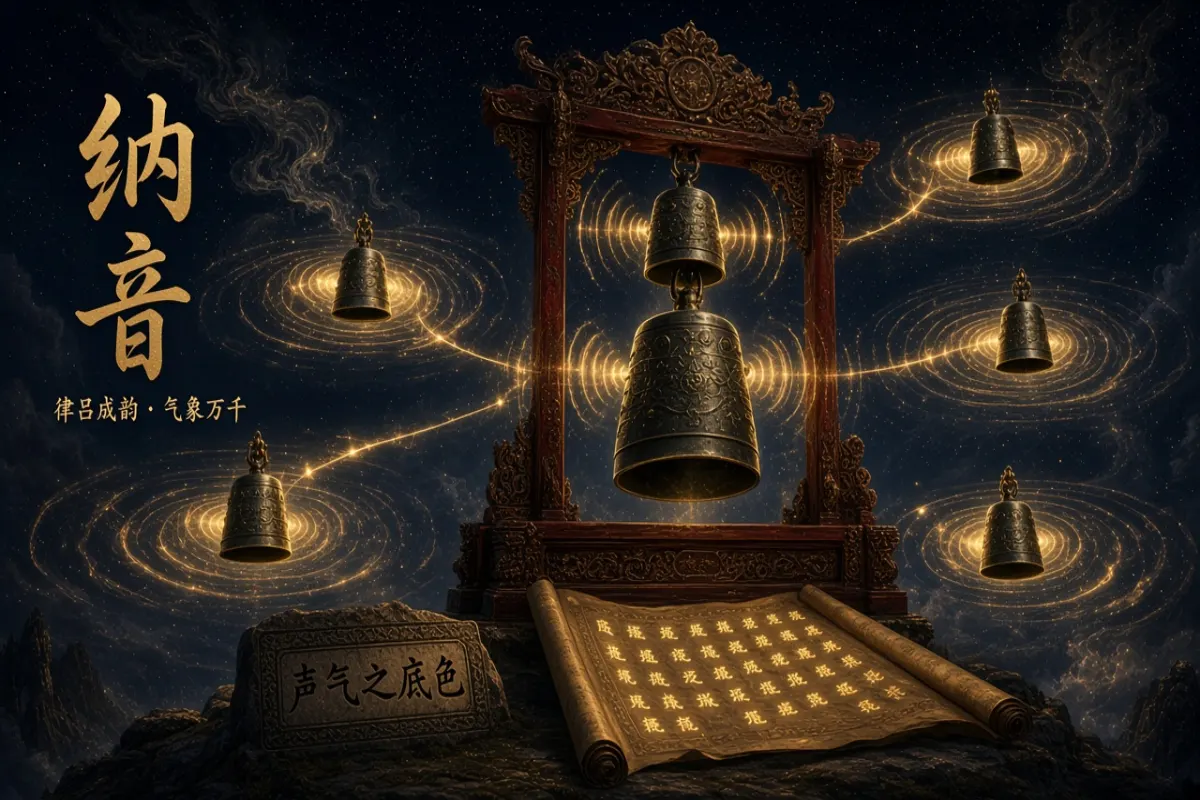
Na Yin represents the elemental undertone of a pillar and cannot replace seasonal command strength; it functions purely as auxiliary temperament. Orthodox regular elements govern structural destiny, Useful Gods, and worldly rise or fall, while Na Yin elements (like Sea Metal, Sword Metal, or Forest Wood) embody the harmonic acoustic resonance and poetic textures of persona. Ground your reading in regular elements, using Na Yin to add fine-grained nuance.
Genesis of Na Yin: Acoustic harmonics and the 60 Jia Zi cycles
Na Yin Five Elements originated from the synthesis of ancient Chinese acoustics, musical pitch-pipes (the twelve Lülü), and astronomical calendars. By aligning the 60 Jia Zi stem-branch combinations with pentatonic musical notes through cyclical tuning permutations, ancient masters mapped resonant sound signatures into vivid titles like 'Sea Metal', 'Forest Wood', or 'Lightning Fire'.
During the Tang Dynasty era of Master Li Xuzhong, Na Yin served as the primary diagnostic frame. When Song Dynasty master Xu Ziping reformed destiny analysis around the Day Master and regular seasonal elements, Na Yin transitioned gracefully into an evocative layer of micro-psychological depth.
Division of roles: Skeletal architecture versus resonant aura
Regular Five Elements (Heavenly Stems and Earthly Branches) form the structural bones, sinews, and circulatory system of a chart. Career altitude, commercial scale, legal trials, and the vital Useful God are over 90% dictated by seasonal commands and regular five-element interactions.
Na Yin functions as the flowing silk robe draped over the frame. For instance, if a chart requires Metal as its operational Useful God, the subject must cultivate resolute decisiveness in concrete life; yet if their birth year holds 'Sea Metal', their subconscious naturally harbors dense, subterranean metallic reserves that require external dredging to shine.
Dismissing romantic unions over folkloric claims like 'You are Stream Water and I am Furnace Fire' is an amateur blunder confusing superficial Na Yin labels with foundational regular compatibility.
Poetic nuances: Decoding archetypal Na Yin textures
Take the 'Metal' category: Jia-Zi and Yi-Chou 'Sea Metal' conceals its brilliance beneath ocean depths—thoughtful, reserved, and quiet until extraordinary crises prompt brilliant triumphs. Ren-Shen and Gui-You 'Sword-Edge Metal' mirrors forged Damascus steel—razor-sharp, unyielding, and fiercely principled, excelling in surgical medicine, litigation, or frontline pioneering.
Take 'Wood': Wu-Chen and Ji-Si 'Great Forest Wood' forms canopy-level shelter, naturally harboring patriarchal benevolence and communal leadership. Ren-Wu and Gui-Wei 'Willow Wood' flexes with every passing breeze—graceful, highly adaptive, yet prone to emotional drift.
Reading Na Yin breathes vibrant psychological color and literary depth into dry five-element equations.
Advanced applications: Special structural flourishes
In classical compendiums like San Ming Tong Hui, Na Yin resolves ambiguous threshold conditions. For instance, in charts where regular Water and Fire clash violently, harmonious Na Yin pairing (like Celestial River Water meeting Mountain Fire) can elevate raw friction into brilliant cultural or intellectual enlightenment.
Similarly, combinations aligning with cosmic gateways indicate profound metaphysical or artistic inclinations. Na Yin excels at pinpointing aesthetic tastes, private philosophies, and subtle vocational nuances.
Boundaries of compatibility: The modest reality of ancestral year melody
Older generations frequently rely on naive Na Yin matching: 'Roadside Earth feeds White Wax Metal, therefore an auspicious match.'
Its genuine merit lies in signaling general family harmony: harmonious year melodies suggest ancestral cultural backgrounds that blend without severe friction.
However, its fatal limit is evident: if the couple's Day Pillars clash violently and their seasonal useful elements oppose, harmonious year melody cannot avert domestic misery. Thus, Na Yin carries only a modest 5% weighting in modern relationship audits.
시작하는 방법
- 1Generate your Ba Zi chart to identify the Na Yin signatures across the Year, Month, Day, and Hour pillars.
- 2Ground the fundamental analysis in regular Five Elements: establish Day Master strength, identify the Useful God, and map the Ten Gods.
- 3Interpret pillar-specific Na Yin textures: read the Year Pillar for ancestral heritage, Day Pillar for intimate domestic mood, and Hour Pillar for later-life philosophy.
- 4Examine harmonic flows: observe whether four-pillar Na Yin elements flow cyclically (Water to Wood to Fire) or collide.
- 5Channel poetic textures into real-world lifestyle: leverage the natural cadence of your Na Yin (e.g., Sword Metal's incisiveness) in vocational mastery.
흔한 오해
- Mistaking the Year Pillar's Na Yin for your core identity (e.g., claiming to be 'Water-natured' while your Day Master is Bing Fire).
- Declaring romantic unions unviable purely because Na Yin elements clash.
- Neglecting the seasonal command's dominance while attempting to extract Useful Gods from Na Yin.
- Taking poetic titles literally (e.g., panicking that 'Sea Metal' portends drowning).
- Discarding robust structural Ten God analysis in favor of esoteric Na Yin tables.
도구 열기
사주팔자
양력·음력 날짜와 진태양시 보정으로 사주 명식을 세우고 사주 원국, 오행, 십신, 대운과 AI 풀이를 확인하세요.
자주 묻는 질문
No. That is merely the Na Yin harmonic of your birth year's stem-branch combination. Your authentic personal core in Ba Zi is always the Day Master (the heavenly stem of your day of birth).
Regular Five Elements dictate destiny without question. They govern worldly triumph, health vitality, and decennial luck. Na Yin serves strictly as an auxiliary interpretive layer.