Flying Stars
Flying Star Feng Shui Basics
Flying Star Feng Shui reads time and space together—how each star, landing in a different sector, tilts it toward fortune or caution. It helps you see which sectors to keep active or quiet this year, not which objects to pile up.
TianJiGe Editorial TeamUpdated
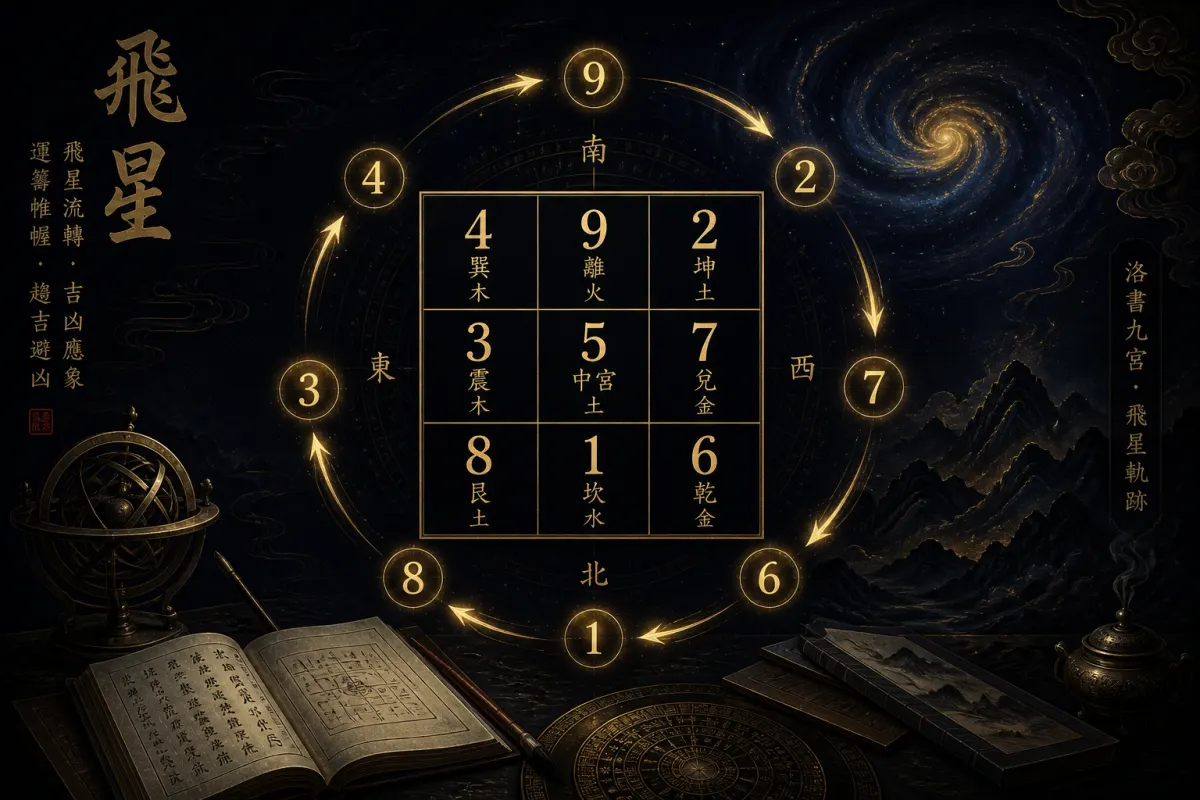
Start with the facing direction and period, chart the natal and annual stars, then map them to real uses—bedroom, kitchen, door, desk—and decide which sectors to keep active, quiet, or lightly adjusted.
The basic logic
Flying Star Feng Shui divides a space into nine sectors, with stars One White through Nine Purple rotating through directions as time changes. The same direction can shift from one year to the next, which is why a layout needs both space and time.
You do not need every formula on day one. Grasp that stars carry tendencies, sectors have uses, and time changes—that is more practical than memorizing labels alone.
Natal chart and annual chart
The natal chart reflects the home's mountain and facing stars and its period luck, relatively fixed. The annual chart shows where stars land this year and is best for yearly fine-tuning.
Many people fixate on where Five Yellow or Two Black land in the annual chart but skip which palace already holds the bedroom, kitchen, or main door in the natal chart. Read both together for sensible weighting.
How the annual stars are used
Annual stars guide yearly adjustments: cautious sectors such as Five Yellow and Two Black, and more usable sectors such as One White, Six White, Eight White, and Nine Purple.
The actual reading still depends on doors, windows, bedrooms, kitchen, desk, cashier, and how often each area is used. A rarely used corner and a bedroom do not carry equal weight.
Why facing direction matters
Annual stars alone are not enough. Facing direction, build period, period luck, mountain and facing stars, and room function all shape the full chart.
Online tools are helpful for first understanding and yearly reference; a complex home still needs its real floor plan, light, circulation, and habits considered.
Active and quiet sectors in practice
Traditionally, sectors such as Five Yellow and Two Black favor quiet: less renovation, less hammering, less long-term clutter. Usable sectors can host a desk, guests, or daily activity.
The goal is to keep cautious areas quieter and useful areas smoother—not to fill every 'bad' corner with gourds and coins. Cleanliness and reduced disturbance often beat object cures.
Adjust lightly, not mechanically
Flying Star work is a reminder to choose wisely by timing, sector, and use—not to turn the home into a Feng Shui shop display.
If a traditional fix harms light, movement, safety, or comfort, reconsider it. Feng shui should serve the way people actually live.
Renters feel this especially: when you cannot change structure, focus on where you sleep, work, and eat rather than stressing over every sector you cannot control.
A yearly refresh around early spring—re-read the annual chart, tidy flow, and reduce disturbance—often beats buying a new set of cures every year.
If a flagged sector is your bedroom or desk, adjust by how often you use it rather than reshaping the whole home for symbolism alone.
How to Get Started
- 1Confirm the home's facing direction, build period, and main entry.
- 2Generate the natal and annual Flying Star charts.
- 3Identify cautious and usable sectors for the year.
- 4Map them to bedroom, door, kitchen, desk, and other real uses.
- 5Favor quiet, cleanliness, less disturbance, and better circulation before objects.
- 6For finer work, adjust lightly by monthly stars or specific events.
Common Mistakes
- Reading the annual sector without the house chart.
- Placing cures by rote.
- Ignoring how often a space is actually used.
- Sacrificing light, flow, and everyday comfort.
- Treating stars as prophecy without observation or adjustment.
Try the Tool
Feng Shui Layout
Enter your facing direction and year to view the Flying Star chart and get space optimization tips.
FAQ
Yes—annual stars shift each year, and monthly stars shift by month. The natal chart is relatively fixed, but the annual chart must be read fresh each year.
Traditionally yes, but how the space is actually used still matters. Less renovation, less clutter, and more tidiness often beat placing objects.
Related Reading
Desk Feng Shui Layout
Moving Date Selection
Feng Shui Layout
Enter your facing direction and year to view the Flying Star chart and get space optimization tips.
Auspicious Date Picker
Browse the Chinese almanac — find the best dates for moving, weddings, business openings, and more.
Daily Fortune
Quick daily reading with luck scores, lucky colors, lucky numbers, and action tips based on your zodiac sign.